Why Good Employees Quit Corporate Jobs: My Gen X Wake-Up Call
I spent years believing hard work, loyalty, and long hours would prove my value. Instead, my corporate job got the best of me while my family got what was left. This is the story of why I quit, what happened next, and how my midlife career change led me toward a different way to work and earn.

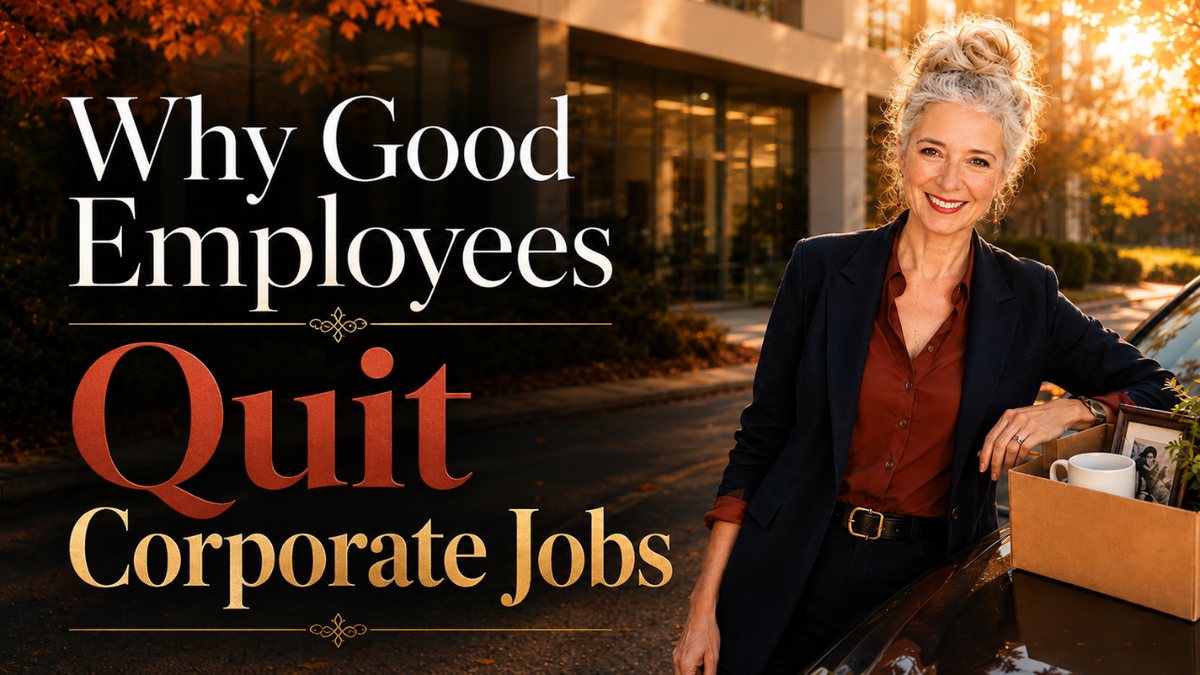
Why Good Employees Quit Corporate Jobs
I did not wake up one Friday morning, toss my coffee mug into a cardboard box, march into my boss’s office, and dramatically announce that corporate life could kiss my ass.
Although, looking back, that would have made a fabulous scene, the truth was a whole lot messier.
I had spent years building a career that paid close to $100,000 a year. From the outside, it looked like success. This Gen X woman had the title, the salary, the responsibilities, and enough people depending on me to make me feel important and valued.
What I did not have was much of a life left outside of work.
I was salaried for forty hours a week, but forty hours was apparently more of a nostalgic suggestion than an actual schedule. Most weeks were closer to sixty or sixty-five hours. Sometimes seventy.
Even if I was at my office by 5:30, came in extra on a Sunday, or was the last to leave at the end of the day, I could still feel the scowls and eyeballs burning into the back of my sensible corporate blouse if I tried to leave an hour early the following Friday.
Apparently, giving the company six days of my week did not count if I was not available for the seventh.
That was how we proved we were team players.
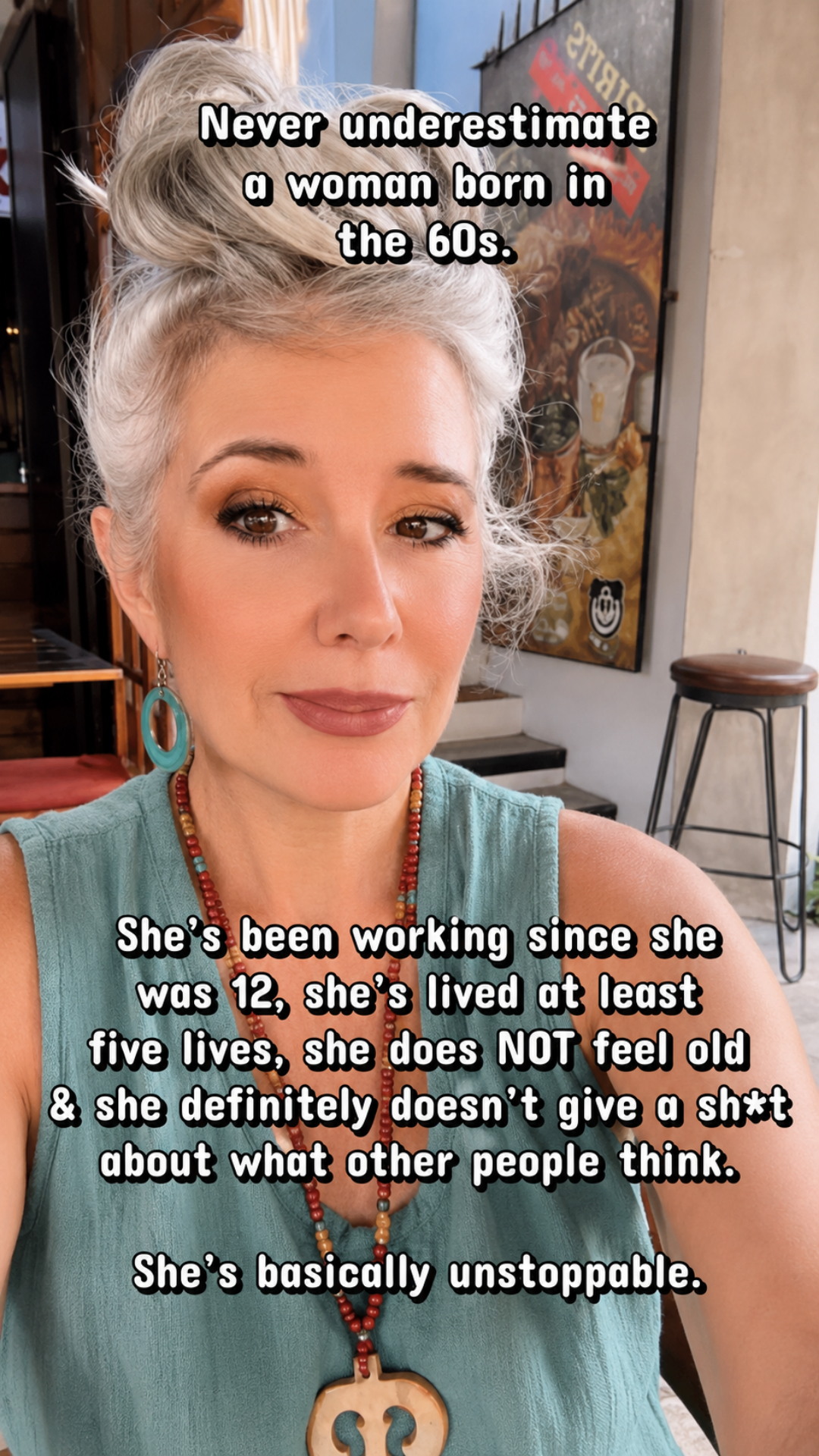
Many women over 50 know this routine. We were born in the 1960s, raised through the 1970s, started working in the 1980s, and were having babies or raising families through the 1990s. We grew up believing that hard work built character, loyalty mattered, and complaining was for wussies.
It's true we drank from garden hoses, rode in the back of pickup trucks, made a great pot of KD at nine and survived hairstyles held together with enough Aqua Net to damage the ozone layer. We did not call every uncomfortable feeling a boundary. Most of us did not know we were allowed to have boundaries.
We knew how to read the room, anticipate other peoples needs to keep the peace, and handle whatever needed to be done because someone had to and that "someone" was usually us.
When another responsibility was handed to us because we were “so good at getting things done,” we smiled a smile that did not match our face, added it to the pile, and silently wondered whether our eye twitch was becoming noticeable.
I was one of those good employees.
Until I quit.
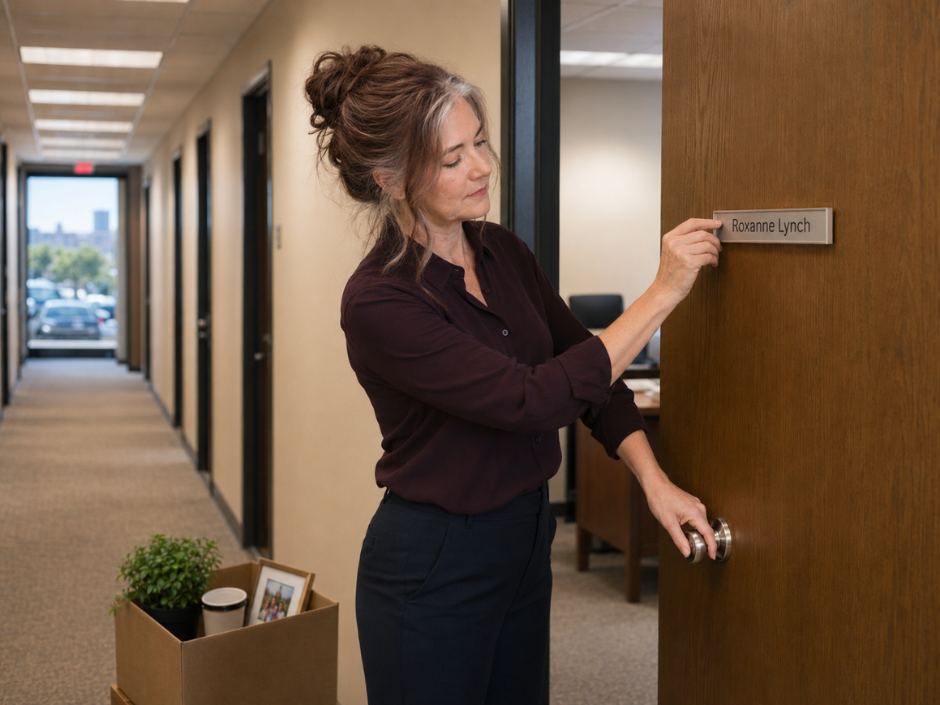
The Week I Quit My Corporate Job
The week I resigned was not part of a carefully planned midlife career change.
There was no colour-coded exit strategy taped inside a leather planner. I did not have twelve months of expenses sitting in a special bank account labelled “Freedom 55 Fund.” I did not have a new career waiting, a digital product ready to launch, or some inspirational quote taped above my desk telling me to leap, fly and trust the net (and life's answers) would appear.
I was simply done.
My husband knew I had been talking about leaving my middle management corporate job. He thought I meant maybe next year, or maybe a few years down the road. Something responsible. Something planned. Something that would give everyone enough time to get comfortable with the idea.
I meant that week.
He had gone away for the weekend to play golf, and I was sitting alone on the couch with tears running down my face and snotty tissues scattered across the floor. It was not an attractive movie moment. I am a an ugly crier. There was no soft lighting, perfect mascara tear, or uplifting soundtrack swelling in the background.
Sitting there clutching my favorite couch blanket, I prayed.. “God, I’m ready. I’m ready. I am ready for change.” I repeated it almost like a mantra.. I was so so very tired of everything.
With my eyes closed, I felt a warm reddish-orange light glow behind my eyelids, and whether someone else understands that moment does not really matter.
I knew what I felt. It was not certainty or a detailed plan, but it was the deepest sense that everything was going to be okay as my shoulders dropped and the tension slowly left my body.
The hiccupping sobs stopped, and I felt warm, calm, and overwhelmingly safe... everything was going to be ok.
I did not know how it would work or what all the details would be, but I knew one thing. I was done.
By Wednesday, I was sitting at my office laptop Googling how to write a resignation letter.
That Friday, I tried several times to speak with my boss. Every time I found her, she was too busy.
“I don’t have time to talk right now.”
Then she would disappear from her office again.
I knew it was Friday and suspected she would be leaving early, so I waited near the foyer. Eventually, she came back to her office and started gathering her purse and getting ready to lock the door.
I walked in.
Once again, she told me she did not have time to talk.
I placed my resignation letter on her desk.
“You have time for this.”
And just like that, I quit the corporate job that had taken years to build and almost everything I had left to give.
My family was shocked, and my friends were astounded because walking away from a salary that close to six figures looked reckless to people who could see the income but could not feel what that corporate job was doing to me.
Even I did not fully understand it yet.
I only knew I could no longer keep handing over the best hours of my life to corporate life and pretending the salary made the trade worthwhile.
🔗 Related Read: Why So Many Gen X Women Feel Financially Exhausted Right Now
We Thought Our Gen X Work Ethic Proved We Were Worthy
Many of us were raised to believe that hard work proved who we were. Us Gen X women were "adulting" before we were 14 and a good number of us were trying to build careers while raising children, keeping a house running, and remembering who needed cupcakes for school the next morning well before we were 25.
My dad was my giant among men, and he believed money should come with blood, sweat, and tears. He had been raised by a man born in the early 1900s, and the message handed down through the family was simple: if we worked hard, took care of our boss, and took care of the company, then our boss and the company would take care of us.
That belief made sense in the world they knew. A person could spend thirty or forty years with one company, retire with a pension, and still be remembered by name after the farewell cake was gone.
A lot of us carried that same belief into corporate life, working from the floor up, even when the rules had already changed.
I was no longer doing the kind of physical work that left dirt under my fingernails or sweat running down my back, so somewhere along the way, long hours became my internal mental proof that I was earning my keep and I was worthy.
If I worked sixty or seventy hours while being paid for forty, I could tell myself I was pulling my weight. I was valuable. I deserved the salary. I had earned my place at the table.
The sweat may have been missing, but I had the tears covered.
That old work ethic fit a little too neatly with the good-girl habits many Gen X women already carried into the corporate workplace. We were the yes girls and the people pleasers who wanted to be trusted, appreciated, and known as the "go-to" woman who never let anybody down. (except ourselves)
Staying late, covering holidays, training new employees, and fixing problems made us feel useful, but it also fed the belief that our value came from how much we were willing to give. When someone said, “I knew I could count on you,” we heard praise, even when what they really meant was, “I knew you would not say no.”
That is the trouble with being the dependable one. The more we proved we could handle, the more people expected us to handle, and somewhere along the way, being needed started to feel a whole lot like being valued.
We tell ourselves loyalty still counts. We believe the extra hours will be remembered, the missed family supper will mean something, and the work we carry home in our heads will someday be rewarded.
Sometimes it is. There are still good bosses and good companies where people look out for one another.
But for many of us, the truth is harder to swallow. We were treating the company like family while the company was treating us like a position to be filled, another cog in the wheel.
We thought being indispensable would make us secure. In reality, many good employees quit corporate jobs because being dependable slowly becomes an excuse to give them more work, more responsibility, and very little room to say no.
And because we had been taught to measure our worth by how much we could carry without complaint, we stayed until carrying it all began to cost far more than the paycheque was worth.
🔗 Worth a Read: The Research Is Clear: Long Hours Backfire for People and for Companies
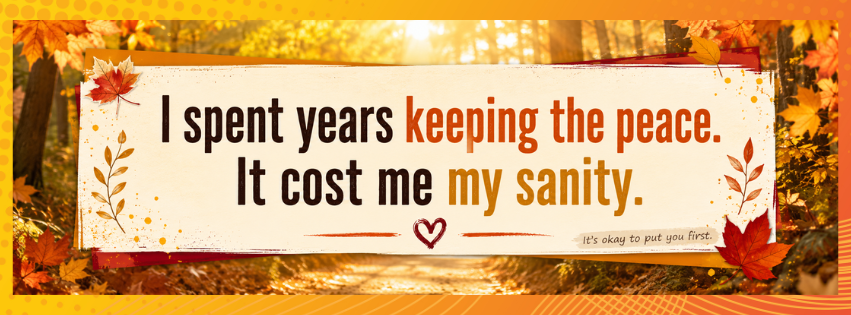
When a Corporate Job Takes More Than It Gives
There was a day when the truth hit me hard enough that I went home in tears. I had spent years rewriting manuals, fixing problems, fresh reports for morning meetings and going the extra mile because I believed the effort counted for something. My name was printed neatly at the bottom of those manuals, but in the end, the company could replace me far more quickly than I wanted to admit.
The manuals would remain, someone else would take over, and the working day would carry on as though I had never been there. I quit on Friday, and the new job was posted by Monday without anyone saying, “I sure miss Roxanne.”
That was a bitter pill to swallow, but it was not the hardest part.
The hardest part was realizing who had been paying the price while I tried so hard to prove my value and dedication.
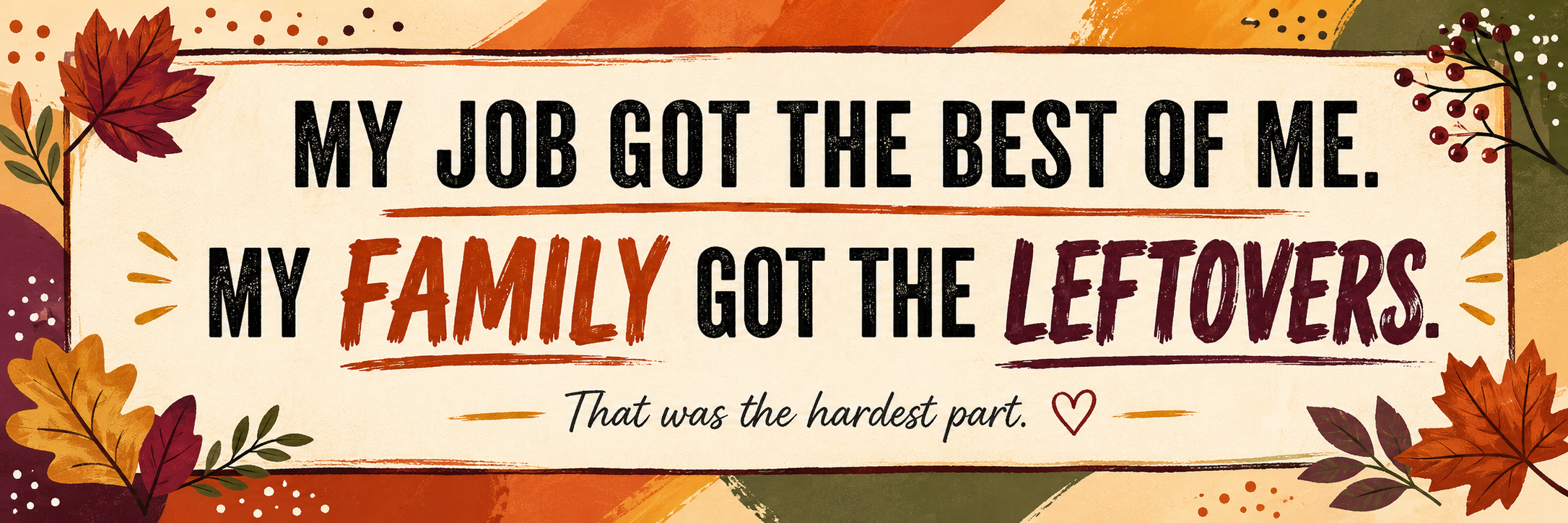
My corporate job received the best hours of my day, my clearest thinking, my patience, my problem-solving, happy energy and the strongest version of me. My husband and children got whatever was left after the working day had chewed me up, spit me out and sent me home.
I told myself I was working that hard for my family, yet they were receiving the tired version of me. I could be sitting at the supper table while my mind was still at the office, replaying a meeting, worrying about the next day, wishing I had thought of a better comeback to the catty Kathy at the water cooler or trying to remember what I had forgotten to finish.
Work came home in my headaches, my tight aching shoulders, my snappish short temper, and the silence that follows a day when every useful, understanding word has already been given at a meeting that should have been an email. By the time I walked through my own front door, the best of me had already been used up.
Looking back, that is the part I regret most. I thought I was giving my family security, but too often I was giving my job my life and handing the people I loved the leftovers.
Leaving My Corporate Job Did Not Make Me Well Overnight
Quitting gave me relief, but it did not undo what years of overwork had done to me. I had spent so long pushing through headaches, exhaustion, mood swings, and tears that feeling awful had started to seem normal. Tylenol was in my car, my purse, my desk, and beside my bed because apparently one bottle was not enough when pain followed me everywhere.
Once the job was gone, I thought I would sleep for a few days, catch my breath, and start feeling like myself again. Instead, I wanted to sleep all the time. If I wasn't napping I was dreaming of napping.
I had no energy, no interest in much of anything, and very little idea how far down I had gone while I was still showing up for work and going through the motions and pretending I was handling it.
When I finally spoke with my doctor, he told me I was in a place of chronic stress and dealing with a very deep depression. That was hard to hear because I had always been the woman who managed things, fixed problems, and kept moving. I did not think of myself as someone who had fallen apart. I thought I was tired. I thought this was "normal" corporate work life.
The trouble was, I had been tired for so long that I no longer knew the difference.
My doctor asked why I had not taken a leave of absence, rested, and gone back once I was feeling better. From the outside, that probably sounded like the sensible idea.
But I knew exactly what would happen.
The job would still be there. The hours would still be there. The workload, the expectations, the office politics, and the constant pressure to prove I was a team player would all be waiting for me when I returned.
A leave of absence might have given my body a break, but it would not have changed the reason I was sick.
Recovery took much longer than I expected. (I struggled to "fix myself" discovering I was much better at fixing other people and problems.) There was no grand moment when I woke up one morning, threw open the curtains, and announced that I was back. It was slow, uneven, and sometimes downright frustrating. Some days I felt stronger, and other days I wondered whether I would ever have the energy to work again.
That was when I began to understand that leaving a corporate job and making a midlife career change are not always the same thing. I had left the job, but I had not yet figured out what came next.
I only knew one thing for certain. I could not go back to a life where work took everything and left me trying to recover on weekends that were never long enough.
And just when I was finally beginning to feel good enough and ready to start a job again, our family life changed in a way none of us saw coming.
My Midlife Career Change Took a Different Turn When My Dad Lost His Vision
By the time I had healed enough, back to the point where I could think about going back to a job, life changed the rules again.
My dad lost his vision unexpectedly after multiple retinal detachments, and within a few days, our family’s plans changed drastically. He had always been active, outgoing and independent. He hunted, fished, gardened, picked berries, wanted to travel more and kept busy doing the things he had worked his whole life to enjoy. Then, almost overnight, much of that was taken away.
At the same time, my mom was beginning to struggle with her memory, and she had never driven a day in her life. I did have siblings, but they lived eight to ten hours away, which meant the doctor's appointments, nurses' check-ins, phone calls, banking, groceries, questions, worry, and the thousand little things that do not fit neatly into a nine-to-five workday fell to me.
I had finally recovered enough to consider returning to work, as my own savings account was edging toward 0, but now I had to ask a different question.
What kind of job, even part time income would allow me to help my parents when they needed me, be available to my family, and still earn money without asking permission every time life went sideways?
That was when my midlife career change stopped being about finding another job and became about finding another way to work, ways to make money.
For many Gen X women caring for aging parents, a midlife career change is not about finding a more impressive job title. I discovered there is no tidy full-time or part-time job posting for a woman in the sandwich generation who needed to earn an income while helping aging parents and still being there for her own family.
The thing was I could not guarantee that every week would look the same, and I was no longer willing to pretend that a rigid schedule mattered more than the people I loved.
🔗 Related Read: How Digital Marketing Helped Me Earn From Home While Caring for Family
That family crisis did not hand me an answer, but it made one thing very clear. I needed a way to make extra money from home that gave me some control over my time.
For the first time, income flexibility was not a nice little bonus.
It was the whole point.
Why I Chose Digital Marketing for Beginners Instead of Creating Everything Myself
Once I knew I needed a way to make extra money from home, I started looking at how I could create income online without running myself into the ground all over again.
I had a bit of experience in online sales, and I already knew I could coach, hold webinars, create a course, or turn some of what I had learned through the years into my own digital products.
I had the experience, the stories, and enough life lessons to fill more than one binder. The trouble was, the thought of creating all of it from scratch made me want to close the laptop toss a blanket over myself, curl up and go back to bed.
I did not want to spend months deciding how many lessons a course needed, whether the font looked right, which colours to use to use in my branding package, or if I needed another worksheet, bonus, freebie, email series, Google forms, and sign-up page before I was finally allowed to earn a dollar. (I shudder even typing that out!)
I had spent enough years overthinking every detail and trying to make everything perfect for everybody else. I was sick and tired of being sick and tired, and I did not need another full-time job disguised as a way to make money from home.
I had been in network marketing years ago and had no interest in DM'ing my friends or family to buy products, no have my social media full of salesy posts.
What caught my attention about digital marketing for beginners was that I could learn the skills quickly, implement and also have the option to market the same digital program I was learning from and make money. When I made a sale, I could keep 100% of the profits.
I did not have to create an entire digital product before I could begin making money. The product, training, and basic systems, and automations were already there, which meant I could spend more time doing things to actually make money that moment. And less time staring at my computer wondering whether I needed one more bullet point or font change, filled with overwhelm and frustration.
For me, that saved time and kept me from getting stuck before I had even started. It also gave me room to use my own voice and talk about corporate life, caregiving, money worries, Gen X life, starting over, and what it felt like to need another income option after fifty.
I did not have to pretend to be an internet expert or somebody twenty-five years younger dancing on video or beside a rented red sports car and a ring light. I could tell the truth, share what I was learning, and begin with something simpler instead of building every piece from scratch.
I did not need another complicated project. I needed a way to learn, share my story, and begin creating income without wearing myself out before I made my first sale.
The free step by step guide explains how this digital marketing path works, what is already included, and why it may be worth a closer look for women who want another income option, creating extra money without creating everything from scratch.
We Do Not Have to Quit Tomorrow to Create Another Income Option
A midlife career change does not always begin with a resignation letter. It can begin after work or on a Sunday afternoon, when we start exploring a new skill, new ways to make money online and looking at income options that might leave more of us for the ones we love most waiting for us at home.
I did not have every answer when I handed my boss that letter. I only knew I could not keep giving my job the best of me and handing my family whatever was left.
We may not be ready to quit tomorrow. We may simply be ready to stop believing that this job is our only option and begin exploring ways to make money from home on our terms.
Frequently Asked Questions
Why do good employees quit corporate jobs?
Many good employees quit corporate jobs because being dependable often leads to more work, longer hours, and greater responsibility without enough support in return. The women who stay late, fix problems, train new employees, and keep everything running can eventually realize the job is taking more than it gives. For many Gen X women, leaving is not about being lazy or afraid of hard work. It is about no longer giving a company the best hours of our lives while our families receive whatever is left.
Is it too late to make a midlife career change after 50?
No. A midlife career change after 50 does not have to mean walking away from a job tomorrow or starting a completely new career from the bottom. It can begin by learning a new skill, looking at flexible work, or creating another income option alongside the job we already have. Women over 50 bring decades of work experience, problem-solving, communication skills, and life experience with them. We are not starting over with nothing. We are starting with everything we already know.
How can caregivers make extra money from home?
Caregivers can make extra money from home by choosing work that allows more control over when and where it gets done. Options may include digital marketing, blogging, freelance work, consulting, selling digital products, or using skills we already have in a new way. The important part is finding income that can work around appointments, phone calls, groceries, and family responsibilities. For women in the sandwich generation, flexibility is not a little perk. It is often the reason working from home becomes possible.
Can beginners create income online with digital marketing?
Yes, beginners can create income online with digital marketing, but it still takes time, learning, and consistent effort. I chose a digital marketing for beginners program because I could learn the skills while also having the option to market the same digital program and keep 100% of the profits from my sales. I did not have to create an entire course from scratch before I could begin. That gave me a simpler way to learn, share my story, and work toward making extra money from home without adding another complicated project to my life.
🌻 Cheers and chat soon,
Roxanne
PS: Curious about the digital marketing program I chose? Take a look at the free Digital Marketing for Beginners Blueprint a step by step guide and see how the 100% profit model works.
... If this made you smile or reminded you of your own working years, 🌿 keep reading, subscribe before you go, and come back to visit anytime. I would also love to hear your story in the comments.
✨ RELATED READS:
- Life Doesn't Start at Retirement. Gen X Women Know This.
- How to Make Money From Home When We're Done Pretending Hustle Culture Pays Off
- Make Money From Home With Digital Marketing for Beginners in 2026
PPS: Want to see how Pinterest can help your words, stories, and skills work longer online? Grab your free download → My Free "7 Foolproof Steps: Turn Pinterest into a Passive Income Earning Machine 🌟.. it's free to download 🦋
Boring Legal Jargon: This blog contains affiliate links. But only for programs I truly love and use in my day. 💛